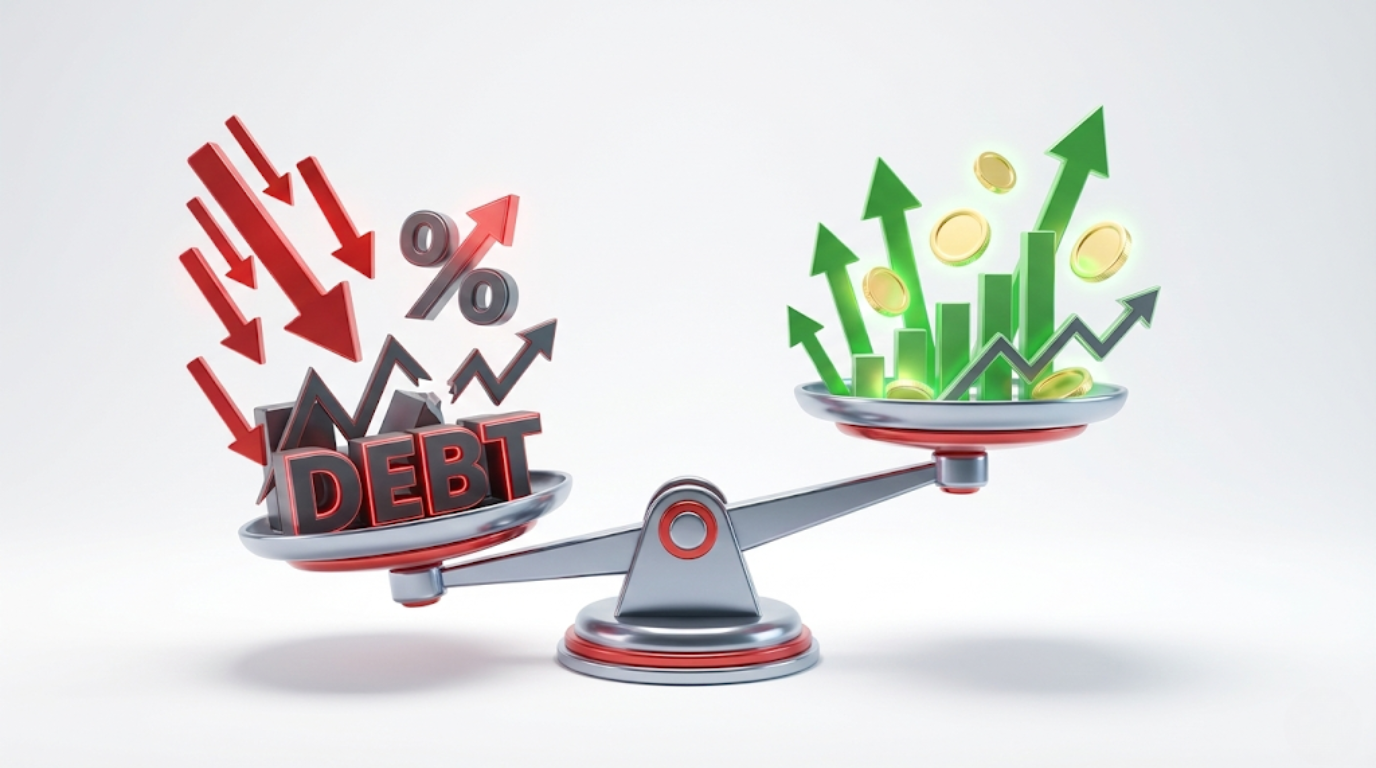
The Real Financial Impact of Credit Rating Migration
Credit ratings are often viewed as a technical outcome of financial analysis. In reality, they are a core driver of a company’s cost of capital, access to funding, investor confidence, and growth capacity.
A single-notch movement in credit rating can alter the economics of borrowing, change strategic decisions, and influence how lenders and investors perceive risk.
This article explores the true cost of a downgrade versus the value of an upgrade, and why rating migration is one of the most powerful financial levers available to a business.
Credit Ratings: The Market’s Risk Shortcut
A credit rating is the market’s simplified measure of creditworthiness. It communicates the likelihood that a borrower will meet its debt obligations.
The relationship is straightforward:
- Higher rating → Lower perceived risk → Lower required return
- Lower rating → Higher perceived risk → Higher required return
Because of this, ratings directly influence:
- Loan pricing
- Bond yields
- Investor demand
- Access to capital markets
- Financial flexibility
Even a single-notch movement can trigger measurable financial consequences.
The Cost of a Downgrade
A downgrade is rarely limited to a higher interest rate. It triggers a chain reaction across the entire financial ecosystem of a company.
1) Immediate Increase in Borrowing Costs
When a rating falls, lenders and investors demand higher compensation for additional risk.
Typical impact:
- Higher interest margins on loans
- Wider spreads on bonds
- Increased refinancing cost
Example Impact
Consider a company with ₹500 crore debt:
| Increase in Interest Rate | Additional Annual Cost |
|---|---|
| 0.50% | ₹2.5 crore |
| 1.00% | ₹5 crore |
| 1.50% | ₹7.5 crore |
Over a 5-year borrowing cycle, this can translate into ₹25–40+ crore of additional cost — purely due to rating movement.
This is the direct financial penalty of a downgrade.
2) Restricted Access to Capital Markets
A downgrade often shrinks the universe of available lenders and investors.
Many institutional investors have strict mandates:
- Pension funds
- Insurance companies
- Mutual funds
- Global debt funds
These mandates may prohibit investment below certain rating thresholds.
Consequences:
- Reduced investor base
- Lower demand for debt
- Harder refinancing
- Shorter tenures
- Tighter covenants
A downgrade can therefore limit funding options exactly when funding becomes more critical.
3) Forced Selling and Liquidity Pressure
If bonds or instruments fall below investment-grade thresholds, some investors are required to exit.
This leads to:
- Forced selling
- Falling bond prices
- Rising yields
- Market perception deterioration
The company experiences a negative market feedback loop.
4) Equity Valuation Compression
The effect of a downgrade does not remain confined to debt markets.
Higher borrowing costs → Lower net profit → Lower earnings visibility.
Investors respond by:
- Increasing risk premium
- Reducing valuation multiples
- Repricing future growth expectations
The company may face:
- Decline in share price
- Reduced investor confidence
- Higher cost of equity
Thus, a downgrade increases both debt and equity cost of capital.
5) Strategic Growth Constraints
Higher cost of capital directly affects business strategy.
Common consequences:
- Delayed expansion plans
- Reduced capital expenditure
- Slower acquisitions
- Working capital strain
- Increased focus on survival instead of growth
A downgrade forces companies into defensive mode.
6) Reputational and Confidence Shock
Credit ratings are seen as independent validation.
A downgrade signals:
- Financial stress
- Weak cash flow visibility
- Higher leverage risk
- Industry or operational challenges
This affects:
- Suppliers
- Customers
- Partners
- Lenders
- Investors
Confidence erosion can sometimes be more damaging than the financial cost.
The Value of an Upgrade
If downgrades create a negative spiral, upgrades create a positive compounding cycle.
1) Lower Cost of Borrowing
An upgrade reduces perceived risk and narrows credit spreads.
Benefits:
- Lower loan interest rates
- Better bond pricing
- Reduced refinancing cost
Even a 50–100 basis point reduction in borrowing cost can generate massive long-term savings.
2) Expanded Access to Capital
Higher ratings unlock a broader funding universe.
Companies gain:
- Access to institutional investors
- Larger ticket funding
- Longer repayment tenures
- Flexible repayment structures
- Better covenant terms
Funding becomes easier, faster, and more competitive.
3) Improved Investor Confidence
An upgrade serves as third-party validation of business strength.
This strengthens:
- Market perception
- Investor participation
- Stakeholder trust
Companies often see:
- Improved valuation multiples
- Stronger demand for securities
- Increased analyst confidence
4) Strategic Growth Acceleration
Lower financing costs create financial headroom.
Companies can:
- Expand capacity
- Invest in technology
- Enter new markets
- Acquire competitors
- Strengthen working capital cycles
An upgrade becomes a growth enabler, not just a financial milestone.
5) Increased Negotiation Power
Higher-rated borrowers gain leverage in negotiations.
They can secure:
- Better pricing
- Flexible terms
- Stronger lender competition
- Faster approvals
The balance of power shifts from lender to borrower.
Downgrade vs Upgrade: A Side-by-Side View
| Impact Area | Downgrade | Upgrade |
|---|---|---|
| Borrowing cost | Increases sharply | Declines steadily |
| Investor base | Shrinks | Expands |
| Market perception | Weakens | Strengthens |
| Equity valuation | Compresses | Improves |
| Funding flexibility | Reduces | Improves |
| Strategic growth | Slows | Accelerates |
| Financial momentum | Negative cycle | Positive cycle |
The Multiplier Effect of Rating Migration
The biggest difference lies in compounding impact.
Downgrade Cycle
Downgrade → Higher interest → Lower profitability → Reduced confidence → Funding stress → Risk of further downgrade.
Upgrade Cycle
Upgrade → Lower interest → Higher profitability → Stronger confidence → Easier funding → Potential further upgrades.
Ratings create financial momentum.
Why Rating Strategy Matters
Many companies focus heavily on:
- Revenue growth
- Profit margins
- Market share
But overlook a critical lever: cost of capital.
A single rating notch can influence:
- Borrowing cost
- Valuation
- Growth speed
- Investor trust
- Strategic flexibility
Few financial decisions deliver such wide-ranging impact.
Final Thought
A downgrade is not merely a change in rating — it is a cost multiplier affecting every layer of the business.
An upgrade is not just recognition — it is a growth multiplier that unlocks opportunity.
The cost of a downgrade compounds.
The value of an upgrade compounds faster.